Guide · Small business SEO
Is SEO Worth It for a Small Business? An Honest Answer
When SEO pays off for a small business, when it doesn't, and how to decide in an afternoon, using your own numbers instead of an agency's promises.
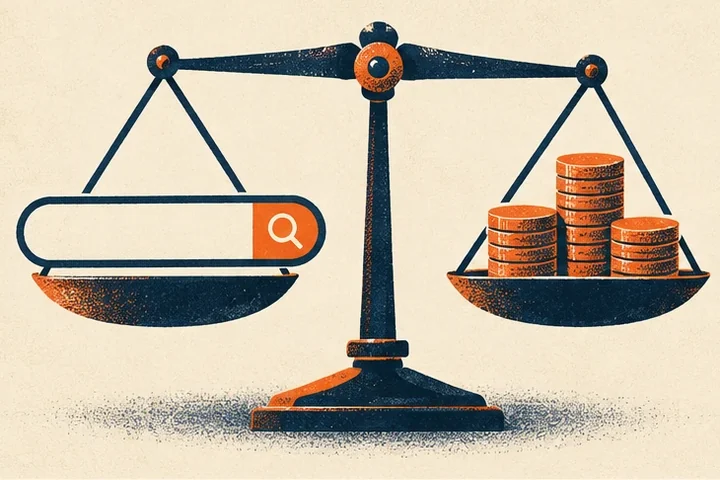
Every agency will tell you SEO is worth it. That’s like asking a barber whether you need a haircut.
The honest answer is: it depends on three things you can check yourself. Whether people search for what you do, what a new customer is worth to you, and how long you can wait for results. If those line up, SEO is usually one of the best-value marketing channels a small business has. If they don’t, there are better places to put your money first, and a good SEO partner should tell you so.
What SEO actually buys you
Strip away the jargon and SEO does one thing: it puts your business in front of people at the exact moment they’re looking for it.
That’s different from most advertising. A flyer, a social post or a radio spot interrupts someone who wasn’t thinking about you. A search for “water heater repair near me” or “accountant for small business taxes” comes from someone who has a problem right now and is choosing who to call.
Three things make that valuable:
- Intent. Searchers are already in buying mode, so the visits tend to convert better than interrupted attention does.
- Compounding. A page that ranks keeps bringing visits month after month without paying per click. Ads stop the moment the budget does.
- Trust. Many people skip the ads and click the first organic or map results, assuming those earned their place.
The catch is that none of this is quick, and none of it is guaranteed.
When SEO is usually worth it
People already search for what you sell
This is the big one. Plumbers, dentists, roofers, accountants, lawyers, landscapers, auto repair shops and wedding venues all sell things people actively search for. If your customers typically type your service into Google before they buy, SEO is in play.
One customer is worth a meaningful amount
If a single new client is worth a few hundred or a few thousand dollars over their lifetime, you don’t need many extra customers a month for SEO to pay for itself. If your average sale is small and one-off, the math gets harder, unless volume is high.
You can wait three to six months
Technical fixes can show within weeks. But growing traffic from searches beyond your own business name usually takes months, and longer in crowded markets. If you need leads next Tuesday, start with ads or referrals, and build SEO alongside them.
Your competitors’ websites aren’t great
Look at who shows up for your main service in your area. If the top results are thin, slow, outdated sites, that’s an opportunity. If they’re national brands with huge content teams, you may need to aim at narrower, local or more specific searches.
When it probably isn’t worth it (yet)
- Nobody searches for it. A brand-new product category that people don’t know to look for needs awareness first: social, PR, partnerships, ads.
- You can’t handle more work. If you’re booked solid for months, SEO can wait until you’re ready to grow.
- Your website can’t convert. Sending more people to a site with no clear phone number, no prices and a broken contact form is like advertising a shop with the door locked. Fix the site first.
- You need guaranteed results by a date. No one can honestly guarantee rankings. If certainty matters more than cost, paid search gives you more control.
How to check before you spend anything
You can get a decent read in an afternoon with free tools.
1. Look at your own Google Search Console
If your site is verified in Google Search Console, open the Performance report and set the date range to the last 12 months. You’ll see which searches already show your site and how often. Lots of impressions with few clicks usually means you’re close, and better titles or pages could unlock traffic you’re already being shown for.
2. Search like a customer
Open a private browser window and search the three or four phrases a customer would really use, including your town. Note who appears in the map results, who appears below, and how good their pages are. Be honest: would you call them?
3. Do the back-of-envelope math
Take a conservative guess at how many extra enquiries a month better visibility might bring, multiply by your normal close rate, then by what a customer is worth. Compare that with what SEO would cost you per month (see our guide to how much SEO costs). If the result only works with heroic assumptions, wait. If it works with cautious ones, it’s worth a serious look.
SEO compared with the alternatives
| Channel | Speed | Cost behaviour | Best for |
|---|---|---|---|
| SEO | Slow to start | Mostly fixed monthly or project cost; results keep working | Ongoing demand people search for |
| Google Ads | Fast | You pay per click, forever | Testing offers, urgent needs, competitive terms |
| Referrals | Varies | Low cash cost, hard to scale | Trust-heavy services |
| Social media | Medium | Time-heavy | Visual businesses, building awareness |
Most healthy small businesses use two or three of these. SEO earns its place because, unlike ads, the investment doesn’t vanish the day you stop paying.
What “worth it” should look like after a year
Don’t judge SEO by rankings alone. A ranking that brings no calls is a vanity metric. After twelve months of competent work you’d reasonably want to see:
- More visits from searches that don’t include your business name
- More calls, form fills or bookings attributed to organic search
- A website that’s faster, clearer and easier to maintain
- A clear, written view of what worked, what didn’t, and what’s next
If you can’t see those things, ask why. That’s exactly why we report monthly in a one-page Visibility Ledger: what we did, what moved, and what’s next, using numbers from your own accounts.
The bottom line
SEO is worth it for most small businesses whose customers search before they buy, who earn enough per customer to justify the work, and who can give it a few months. It’s not worth it as a quick fix, as a substitute for a website that converts, or when someone promises you page one by a date.
If you’d like a second opinion on your own situation, run the free audit preview for a quick technical check, or book a 20-minute call. We’ll tell you if SEO isn’t your best next step.